
 416-962-1010


OTOPLASTY AT POWER PLASTIC SURGERY
Otoplasty (ear surgery) may be performed to set back ears that appear prominent. During surgery, the underlying cartilage is reshaped and sutured in a position closer to the head in proportion with other facial features. Small incisions are made behind the ears to expose the ear cartilage. The resultant scars are well-concealed and often hidden by the patient’s hair.
Otoplasty is performed as out-patient surgery, most commonly under local anesthetic. Patients are required to wear a bandage dressing following ear surgery for one week. This applies gentle support for the ears during early healing. Patients may generally return to work within one week of surgery, however should refrain from strenuous activity or heavy lifting for one month post-operatively.
Ear Surgery Cost in Toronto
Our starting fees:
Otoplasty
from $8,480
Varies with anesthetic and extent of surgery
Earlobe repair, one side
from $560
Stretched or torn earlobe
Earlobe repair, both sides
from $1,000
Stretched or torn earlobes
Earlobe reduction
from $2,360
Reducing earlobe size
Prices shown are starting fees. Your personalized quote itemizes the fees that apply to your surgery, such as the surgeon fee, anesthesia, facility and nursing fees, supplies and HST. Quotes are valid for 6 months. A non-refundable 25% deposit secures your surgery date, and the balance is due 3 weeks before surgery. Monthly payment plans are available through Beautifi financing.
Otoplasty Recovery Timeline
A typical recovery with Dr. Power. You will receive written instructions, and your plan is tailored to you.
- About 1 weekMost patients return to school or office-based work.
- 4 weeksExercise can usually resume at about one month.
Types of Earlobe Procedures
The following earlobe procedures may also be performed in a minor procedure room setting:
Torn Earlobe Repair
Earlobe piercing tracts may become elongated due to heavy earring wear or following an episode of trauma. Both stretched and torn earlobe piercings may be corrected under local anesthetic. The piercing tract or cleft (if completely torn) is excised and then closed using small stitches on the front and back of the earlobe. These sutures are removed one week later. It is recommended to delay re-piercing the earlobe for approximately 4-6 months to lower the risk of recurrent stretching or pull-through
Earlobe Augmentation
Earlobes may lose volume through facial aging. Augmentation with hyaluronic acid fillers may be performed to restore a more youthful appearance of the earlobes. Filler injections within this region may restore earlobe volume as well as soften wrinkles which may become more prominent over time.
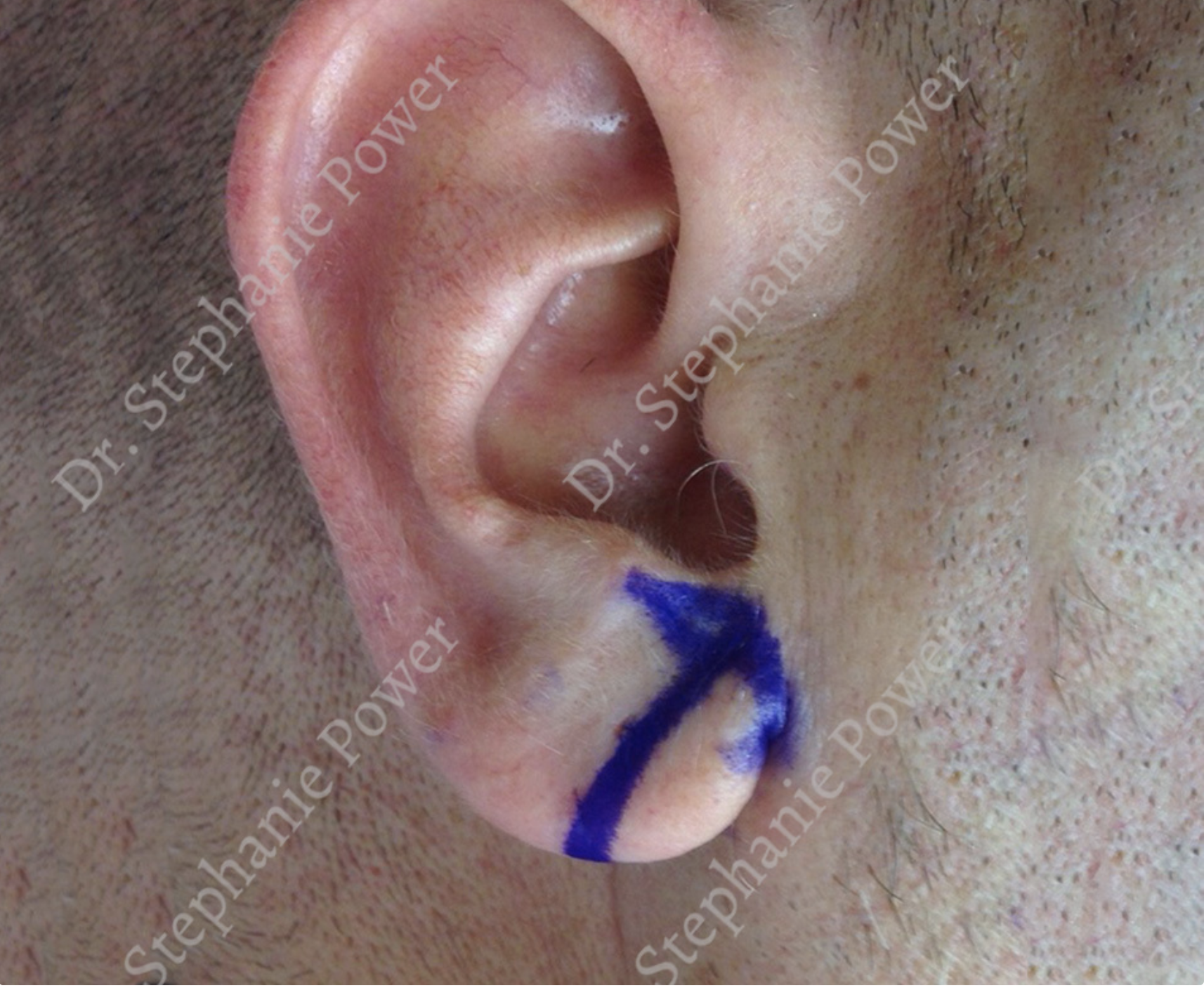
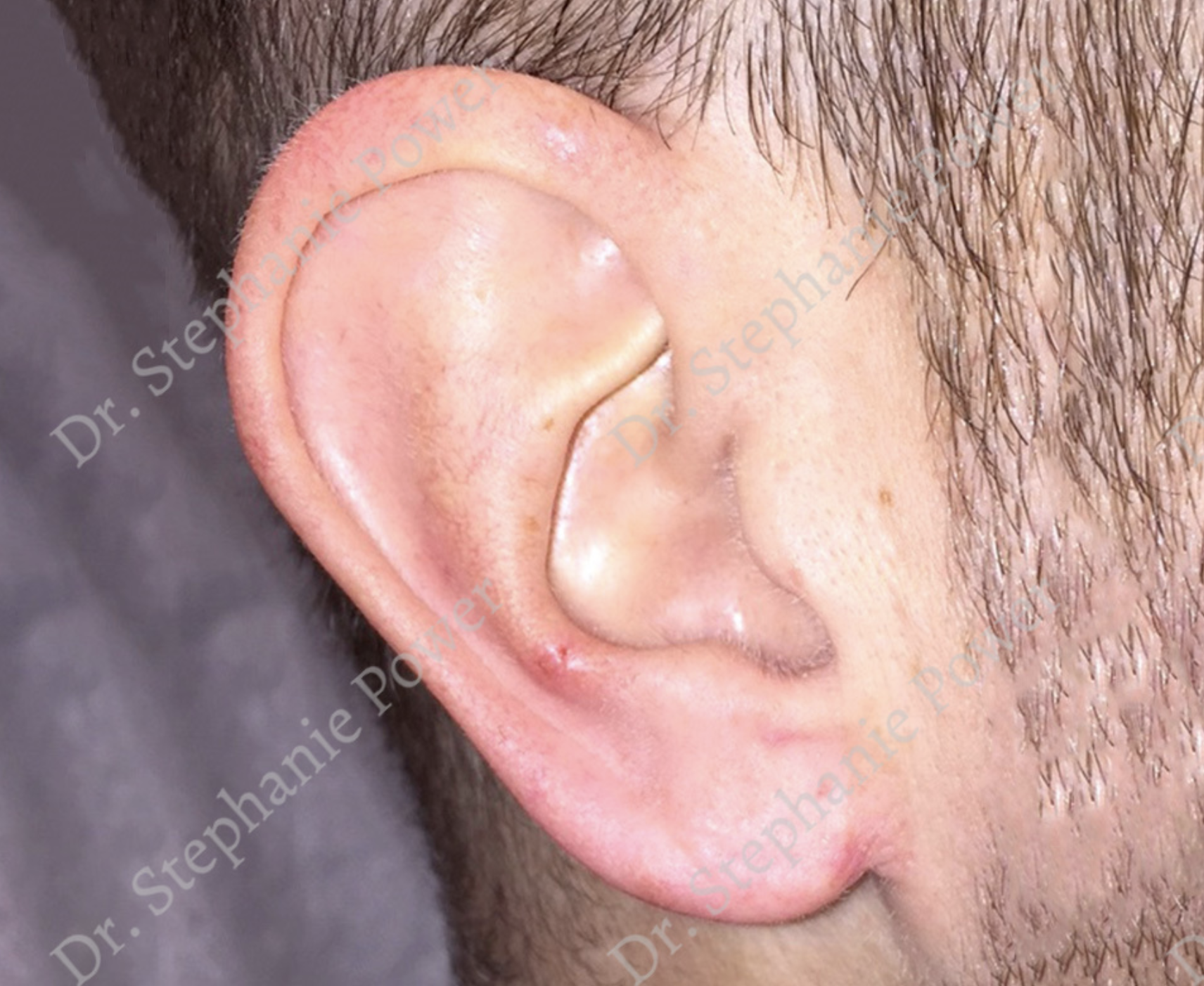

It is also possible to reduce earlobes that have been expanded. It is generally recommended to first downsize the spacers over a few months to allow the piercing tract to contract. Reconstruction may then be performed to reduce the redundant earlobe tissue and to improve contour.
Earlobe Reduction
Earlobes may also be reduced for cosmetics. The resultant scar is placed along the earlobe-cheek junction to minimize its appearance over time. The stitches are removed one week later.
Earlobe Reduction Following Earlobe Spacers/Expansion
Bandages are not required beyond the first 24 hours following earlobe surgery. Wound care instructions will be provided.
About Your Surgeon
Dr. Stephanie Power, MD, MSc, FRCSC
Plastic surgeon certified by the Royal College of Physicians and Surgeons of Canada
Your ear surgery consultation at Power Plastic Surgery is with Dr. Power. She earned her MD and completed her plastic surgery residency at the University of Western Ontario, where she also completed an MSc in Medical Biophysics. She received her Royal College certification in Plastic Surgery (FRCSC) in 2013, then completed fellowships in Aesthetic Surgery and in Trauma and Reconstructive Surgery at the University of Toronto. Before medicine, she graduated with honours from Princeton University.
Her Toronto practice has an all-female team.


"I think the best results are natural-looking. Refreshed and reflected by a patient’s self-confidence."
- DR. STEPHANIE POWER