
 416-962-1010


ARM LIFT AT POWER PLASTIC SURGERY
For many patients, the upper arm is a focal region of concern as redundant skin and soft tissue develops. This commonly occurs following weight loss and the natural aging process. Patients considering arm lift surgery often report feeling uncomfortable when wearing short-sleeved shirts and dislike this drooping tissue. Following massive weight loss, patients often express that they are not able to fully enjoy their new figure given this skin redundancy.
Both massive weight loss and the natural aging process result in loss of skin elasticity. Many patients develop skin excess and descent of soft tissues of the upper arms. It may be frustrating that no matter how much training is performed, this skin redundancy is often unresponsive to exercise.
Arm Lift Before and After Photos
Real patients of Dr. Power, from our photo gallery. Every body is different, and your results will depend on your anatomy and goals.
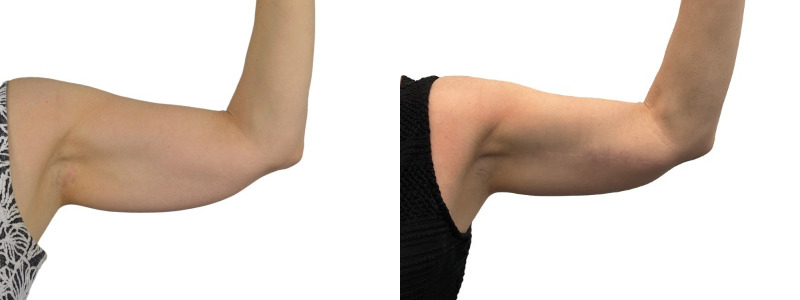
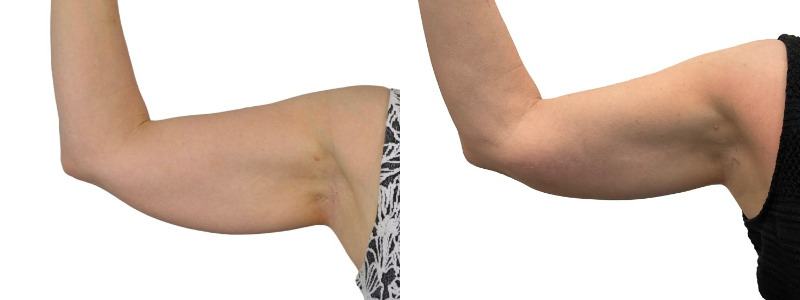
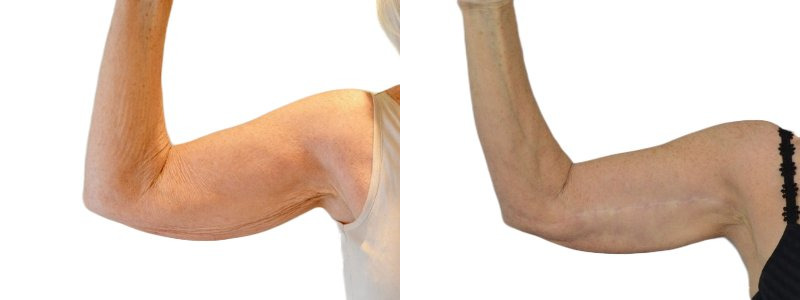
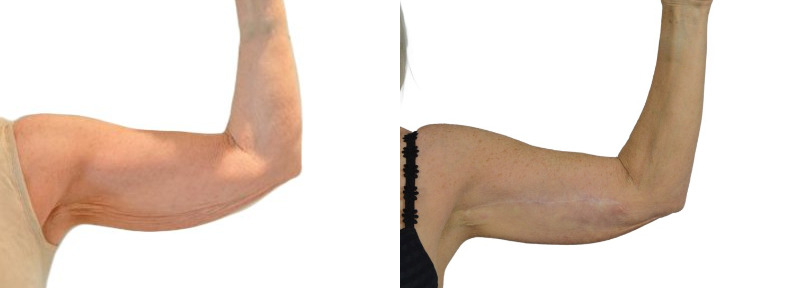
Individual results vary.
Arm Lift Cost in Toronto
Our starting fee for arm lift (brachioplasty):
Arm lift
from $12,040
Brachioplasty
Prices shown are starting fees. Your personalized quote itemizes the fees that apply to your surgery, such as the surgeon fee, anesthesia, facility and nursing fees, supplies and HST. Quotes are valid for 6 months. A non-refundable 25% deposit secures your surgery date, and the balance is due 3 weeks before surgery. Monthly payment plans are available through Beautifi financing.
Arm Lift Recovery Timeline
A typical recovery with Dr. Power. You will receive written instructions, and your plan is tailored to you.
- First weekYour first follow-up visit with Dr. Power is usually within the first week.
- About 1 weekMost patients return to office-based work within a week. More strenuous jobs may need a longer recovery.
- 1 monthAvoid exercise and strenuous lifting for one month to lower the risk of bleeding, swelling and wound healing problems.
- 6 weeksCompression garments are recommended for 6 weeks to minimize swelling and support the tissues as they heal.
- Following monthsFurther follow-up visits continue over the next few months to monitor your healing.
What is Arm Lift Surgery?
Arm lift (brachioplasty) is a surgical procedure that removes excess, sagging skin – and subcutaneous tissue to a lesser degree – of the arms. It may be performed to tighten the skin and soft tissue envelope of the upper arms. This skin has been stretched beyond its ability to retract. Patients often dislike the appearance and sensation of this jiggling tissue.
An arm lift procedure is the only way to remove the redundant skin and tighten the skin envelope, given increased skin laxity. It is performed under general anesthetic in an operating room setting. The incisions for arm lift surgery vary based on the patient’s aesthetic goals and clinical presentation. Incision and resultant scar placement will vary depending on the degree of redundant tissue. Arm lift may range from a limited incision within the underarm region to an incision extending down the medial (inner) arm to just above the elbow. In more severe cases, the incision may extend onto the side of the chest wall to tighten skin and resuspend soft tissues in this region.
Although a small scar may be placed within the underarm to correct mild skin redundancy, more commonly, an incision is made from the underarm to elbow level. This is the trade-off in arm lift surgery to improve arm contour. The traditional arm lift may achieve more dramatic results at the expense of a longer scar. This scar may widen with time but will generally fade to appear skin-colored. It is important for patients to consider the scar appearance when wearing short-sleeved clothing.

Who is a candidate for an arm lift?
The most appropriate candidate for arm lift surgery has redundant skin of the upper arm and is willing to tolerate a scar to improve arm contour. It is not possible to remove redundant skin and to tighten the soft tissue envelope without leaving a scar, which extends from the underarm to elbow region in most cases. Most patients presenting for arm lift surgery understand this trade-off and are willing to accept a scar to remove this redundant tissue. The most appropriate candidate for arm lift wishes to removes the drooping tissue of the upper arm, which often jiggles with upper body activities. Candidates for arm lift are willing to accept the scar for the end outcome. The scar may be concealed for important events using scar-concealing makeup if desired.
It is also important for patients undergoing arm lift surgery to be otherwise healthy and non-smokers. Smoking increases the risk of wound healing complications, including wound dehiscence (referring to wound separation), infection, and skin flap necrosis. Smoking cessation for at least one month pre- and post-operatively has been shown to lower the risk of developing wound healing complications.
Patients considering arm lift should also achieve a stable weight and maintain a healthy body mass index, ideally less than 25, before undergoing surgery. Significant weight loss following this surgery may result in altered outcomes.
Arm lift is not an appropriate surgery for reducing fatty tissue to reduce the overall size of the arm. The most appropriate candidate presents with redundant skin as opposed to fatty tissue excess. A small focal region of adiposity may be removed through arm lift, however it is not an effective surgery for weight reduction.
What are procedure options for arm lift surgery?
The two main types of arm lift surgery are the mini and traditional arm lifts. In a mini arm lift, a small portion of skin may be removed through a limited incision in the underarm. Liposuction may also be performed during this procedure for further sculpting of the arm. This procedure is appropriate for those with minimal skin and fatty tissue excess. Most patients considering arm lift do so for drooping tissue of the upper arm. These patients generally require a traditional arm lift, which leaves a longer incision from the underarm to elbow level. Lesser invasive options will not achieve equivalent results to a traditional arm lift.
What are risks and benefits of arm lift?
The main benefit of brachioplasty is the improvement of arm contour and tightening of the soft tissue envelope through resection of redundant skin. It is not an effective technique to reduce fatty tissue of the arms. The trade-off for a traditional arm lift is a long scar. Other risks of surgery include bleeding, hematoma, impaired wound healing, infection, fluid accumulation (seroma), overresection potentially requiring delayed closure or a skin graft, risk of injury to surrounding structures, and numbness. There are also aesthetic complications including asymmetry, over- or undercorrection, hypertrophic scarring, and dissatisfaction with the aesthetic result. Arm lift is generally a well-tolerated procedure in appropriately selected patients who understand the scar placement and are well-educated about the procedure.
Brachioplasty is performed as outpatient surgery under general anesthetic. Patients are required to wear a compression garment post-operatively, which may be concealed under long-sleeve clothing. This may serve to decrease swelling and to expedite healing. Patients may generally return to work within 1-2 weeks, however must refrain from strenuous activity or heavy lifting for 4-6 weeks post-operatively.
About Your Surgeon
Dr. Stephanie Power, MD, MSc, FRCSC
Plastic surgeon certified by the Royal College of Physicians and Surgeons of Canada
Your arm lift consultation at Power Plastic Surgery is with Dr. Power. She earned her MD and completed her plastic surgery residency at the University of Western Ontario, where she also completed an MSc in Medical Biophysics. She received her Royal College certification in Plastic Surgery (FRCSC) in 2013, then completed fellowships in Aesthetic Surgery and in Trauma and Reconstructive Surgery at the University of Toronto. Before medicine, she graduated with honours from Princeton University.
Her Toronto practice has an all-female team.


"The biggest hurdle for a lot of women is coming in for the consultation. Many do not want to appear vain or they feel guilty about finally spending money on themselves."
- DR. STEPHANIE POWER